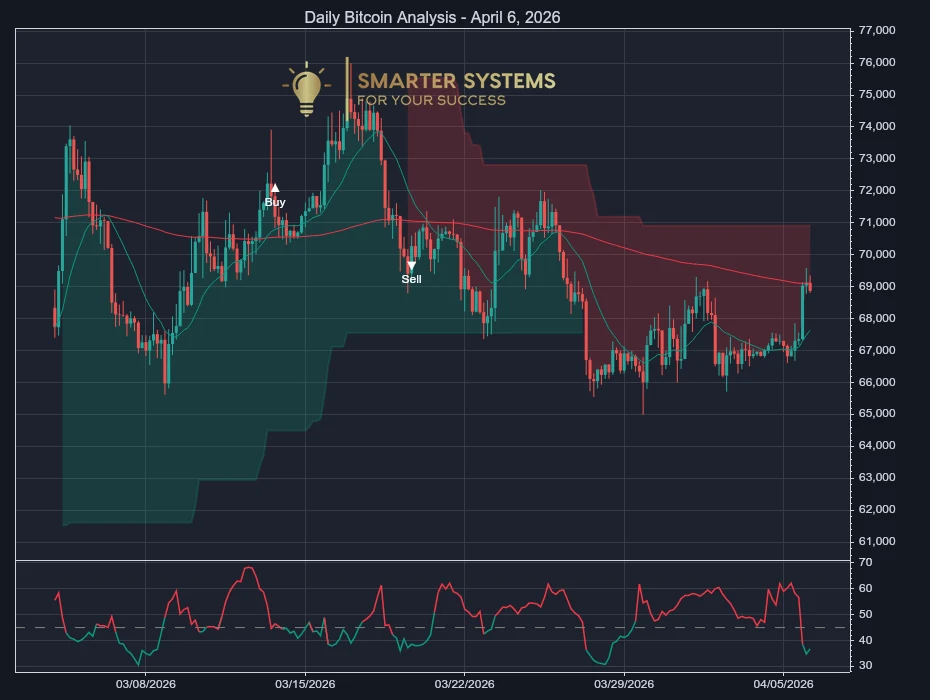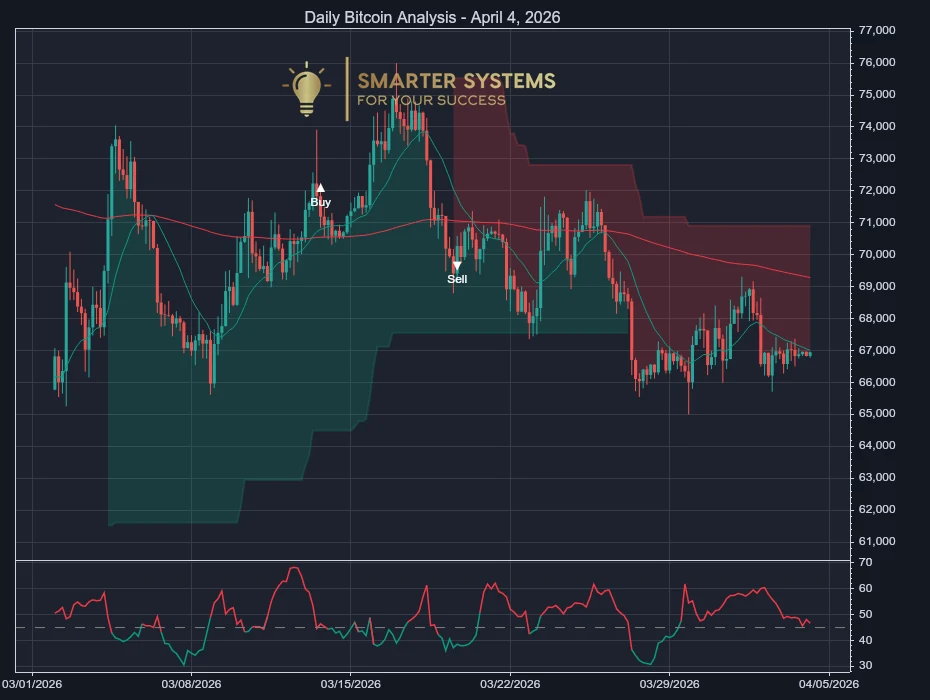
// previous briefing Daily Bitcoin Analysis - April 4, 2026
Bitcoin Market Read for April 5, 2026
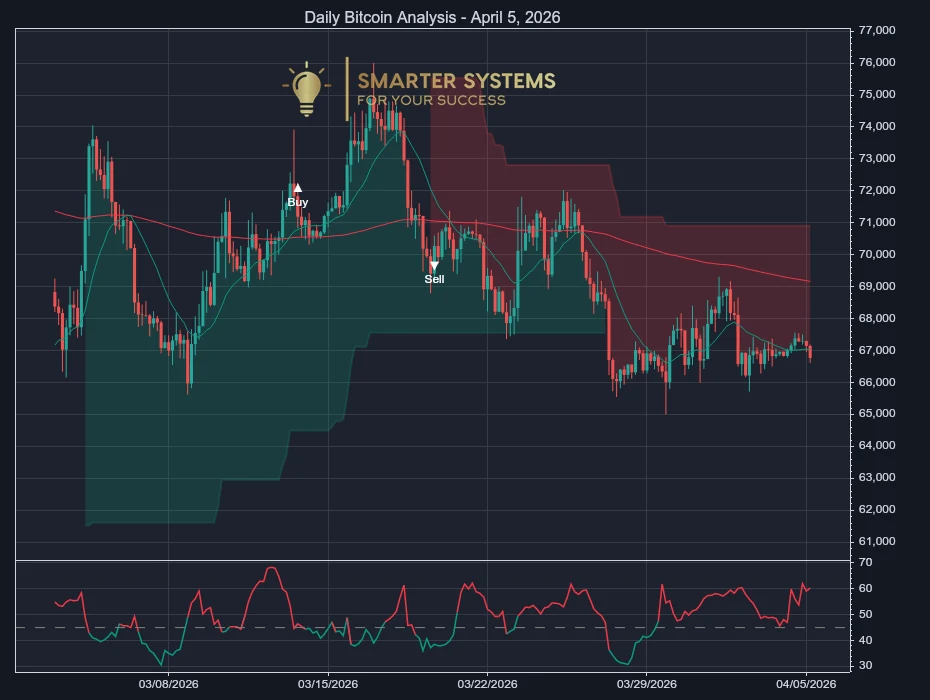
Bitcoin is trading at 66770.82, and the striking part of the latest move is not simply that price moved lower, but that the market could not hold its ground after several attempts to stabilise higher up. There was enough interest earlier to push Bitcoin back toward the upper end of the recent area, yet that effort did not build into anything durable. Instead, each push started to look thinner, and the latest move exposed that loss of traction quite clearly. What stands out here is the absence of convincing follow-through from buyers at a moment where they needed to show persistence. Bitcoin is not falling apart in a dramatic way, but the market is showing that support is less dependable than it first appeared.
At the moment, Bitcoin looks soft and somewhat unsettled. Price is leaning lower, but not in a clean, one-direction move that would suggest broad urgency. It feels more like a market where sellers have gained the upper hand because buyers are no longer willing to defend every dip with the same confidence. There is still two-way trade, and that matters, because it tells us this is not a one-sided liquidation move. Even so, the tone has shifted. Bitcoin is spending more time giving back prior gains than building on them, and that usually tells you that participants are becoming more cautious with fresh exposure.
Looking only at what changed from the previous period into the latest one, the picture became weaker in three important ways. First, Bitcoin extended lower after already showing signs of hesitation in the earlier sessions, so the most recent move was not an isolated slip but a continuation of fading strength. Second, the latest price swing widened noticeably, which tells us that volatility picked up and that the market became less comfortable around recent levels. Third, participation eased rather than expanded, which is often an important detail. When Bitcoin drops on lighter activity, it can mean there is no full capitulation yet, but it also tells you buyers were not stepping in with enough force to absorb the pressure. In other words, the decline did not need heavy selling to move price lower. That is often a sign of a market that is easier to push down than up in the short term.
The broader shape of Bitcoin here still points downward, even if the path is not especially clean. The market is making less progress on advances than on declines, and that asymmetry is what matters. At the same time, the action is not smooth. Bitcoin is swinging back and forth inside the move, with rebounds that appear briefly and then fade before they can change the tone. That creates a messy feel where price does not travel in a straight line, yet the underlying pressure still leans to the downside. For investors, this combination is important because it can create false comfort. A short recovery can appear constructive in the moment, but unless it attracts steady follow-through, it remains vulnerable to being sold into.
Against that backdrop, this looks like a phase where it could be wise to take profits rather than press for fresh upside. Bitcoin is not offering the kind of price behaviour that rewards aggressive buying here. The market has shown that rallies are struggling to hold and that support is giving way without requiring exceptional selling pressure. That does not mean Bitcoin cannot bounce, because it certainly can, especially in a messy tape like this. But from a capital preservation standpoint, the more disciplined posture is to respect the soft tone and avoid treating every dip as an opportunity. When a market stops rewarding strength, prudent investors usually reduce exposure before they look to add again.
A practical point in this kind of phase is that Bitcoin often does its real damage through frustration rather than speed. Price can drift lower, pause, recover briefly, and then slip again, which wears down conviction on both sides. That is why patience matters. Investors do not need to predict every short-term move in Bitcoin. What tends to matter more is waiting for price to show that buyers can hold ground and build from it, rather than merely interrupt a decline for a few hours. Until that happens, the market is more likely to keep testing resolve than to offer clean upside progress.
// disclaimer This briefing is educational market commentary from a rule-based system. It is not financial advice and not a personal recommendation. Cryptocurrency is highly volatile, and past signals do not guarantee future results. Only invest money you can afford to lose. Read the full disclaimer.