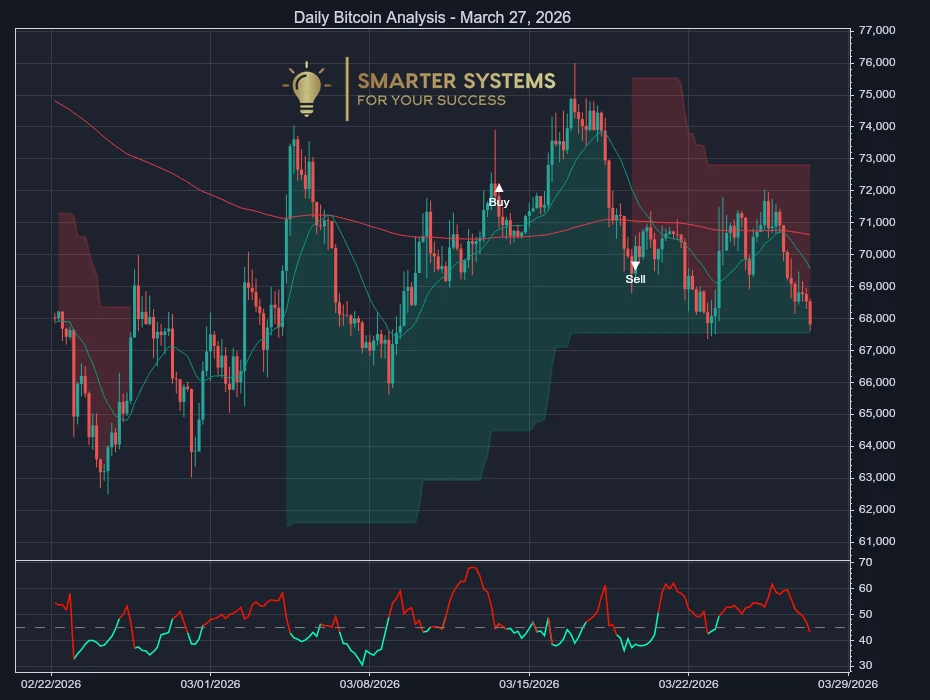
// previous briefing Daily Bitcoin Analysis - March 27, 2026
Bitcoin Market Read for March 28, 2026
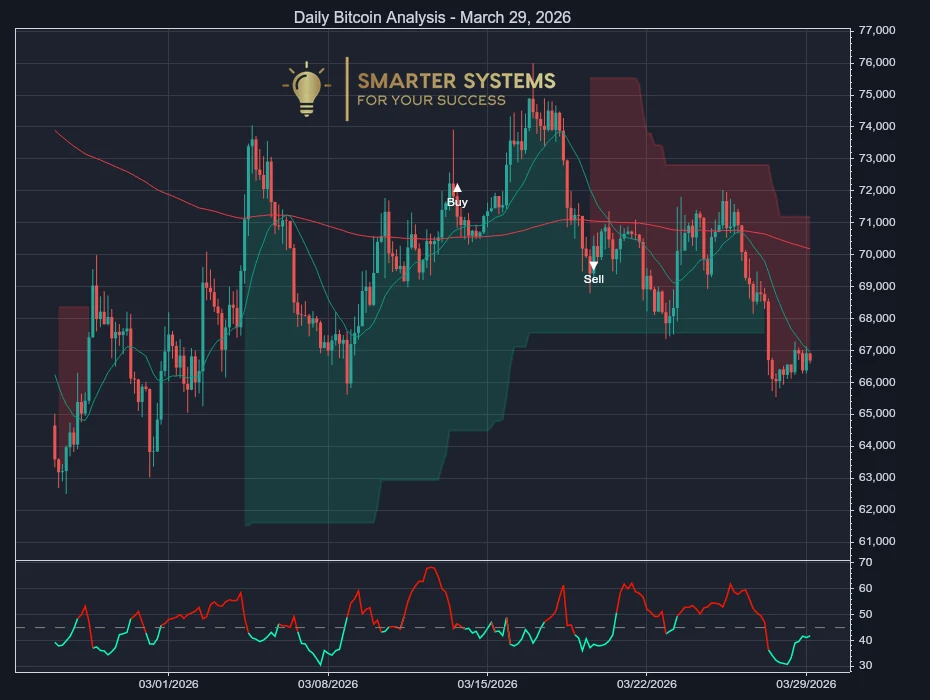
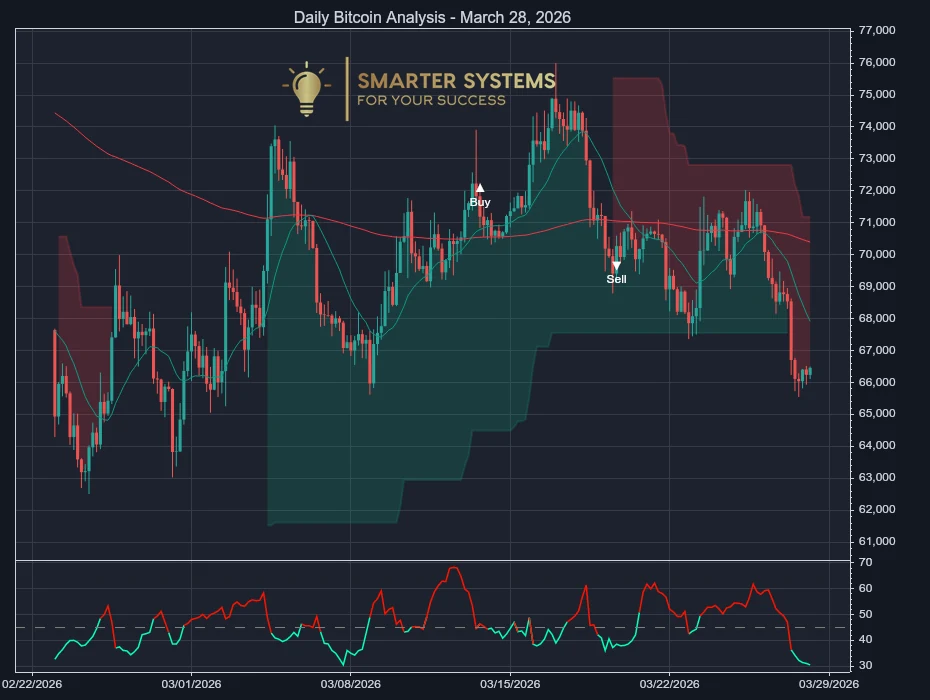
Bitcoin is trading at 66461.02, and the striking feature in the latest move is not aggression but restraint. After a sharp break lower earlier in the sequence, the market has not produced the kind of rebound that would suggest eager demand stepping in with conviction. Instead, price has stabilised without truly repairing the damage. That creates a useful tension. On the surface, Bitcoin looks calmer than it did during the initial slide, but underneath that calm sits a market that still has not shown much appetite to reclaim lost ground. When a market absorbs pressure yet fails to lift with authority, it usually tells you that sellers are no longer in a rush, but buyers are not yet prepared to press their advantage either. In Bitcoin, that often matters more than the absolute move itself, because it reveals whether capital is trying to rebuild exposure or simply waiting for better levels.
The current condition is fairly straightforward. Bitcoin is sitting in a softer posture after a clear loss of footing, and the recovery effort has been hesitant rather than decisive. Price is no longer falling with the same urgency seen earlier, but that does not mean strength has returned. It means the market is pausing. There is a difference between a market that is finding support and one that is merely no longer dropping for the moment. Here, Bitcoin appears closer to the second case. The recent behaviour suggests that participants are still cautious, and that caution is visible in the way each attempt to lift has remained modest. The market is not in panic, but it is also not displaying the kind of follow-through that would shift the tone meaningfully. That leaves Bitcoin in a position where short-term stability exists, yet confidence remains limited.
Looking only at what has happened since the previous period, the move was a small upward step rather than a broad reclaim. Bitcoin pushed higher from its opening level and held the gain into the close, which is constructive in isolation, but the size of that advance was modest compared with the earlier decline that set the tone. Just as important, the trading span narrowed again. The market covered less ground between the high and the low than it did in the previous period, continuing the cooling process that has been in place for several sessions. Participation also eased further. Volume was lighter again, which suggests that this latest bounce did not attract a strong wave of fresh commitment. That combination matters. A higher close on a tighter span and thinner participation often reflects a market that is finding temporary balance, not one that is beginning a forceful turn. In Bitcoin, when price lifts but involvement fades, the move deserves respect as a pause in selling pressure, but not yet trust as the start of something more durable.
The broader structure still leans lower, and it is doing so in a relatively orderly way. Bitcoin has moved from a sharper downside burst into a more controlled sequence of smaller swings, but the directional pressure remains tilted to the downside because the market has not managed to rebuild the ground it lost. The path has become smoother rather than erratic. That is worth noting because orderly weakness tends to reflect a market where sellers remain in control without needing to force the issue aggressively. There is less noise, less disorder, and less emotional movement than one might expect after a heavy push lower. But smooth price action can still carry a negative message when each recovery attempt remains shallow. For Bitcoin, this is not a confused market throwing price around without purpose. It is a market that has eased into a steadier descent, then paused, while still showing little evidence that buyers are ready to reverse the direction with any conviction.
In that context, it could be wise to take profits rather than assume this stabilisation automatically leads to a stronger recovery. Bitcoin is not collapsing here, but it also is not offering much proof that the recent weakness has run its course. When a market loses altitude, then settles into narrower movement on fading participation, experienced investors usually pay close attention to who is not showing up. Right now, Bitcoin is missing the visible urgency from buyers that would normally accompany a more convincing turn. That does not mean price must break lower immediately. It means the reward for pressing optimism here appears limited relative to the risk of renewed weakness if sellers lean back in. For anyone carrying exposure from higher-quality entries, this type of phase often favours discipline over ambition. It is less about reacting emotionally to a drop and more about recognising that the market has not yet earned a more constructive interpretation.
Markets often behave in a very recognisable way during phases like this. After an initial downward push, they frequently transition into calmer trading that encourages premature confidence, especially when price stops falling and starts drifting slightly upward. But unless stronger participation returns and the recovery begins to cover more ground with clearer follow-through, that calm can simply be a pause before pressure reappears. Bitcoin is showing many of those traits now. The practical takeaway is simple: in this kind of market, stability alone is not enough. Investors are usually better served by watching whether Bitcoin can attract firmer demand after the pause, rather than treating a quiet bounce as proof that the market has turned.
// disclaimer This briefing is educational market commentary from a rule-based system. It is not financial advice and not a personal recommendation. Cryptocurrency is highly volatile, and past signals do not guarantee future results. Only invest money you can afford to lose. Read the full disclaimer.