// previous briefing Daily Bitcoin Analysis - March 21, 2026
Bitcoin Market Read for March 22, 2026
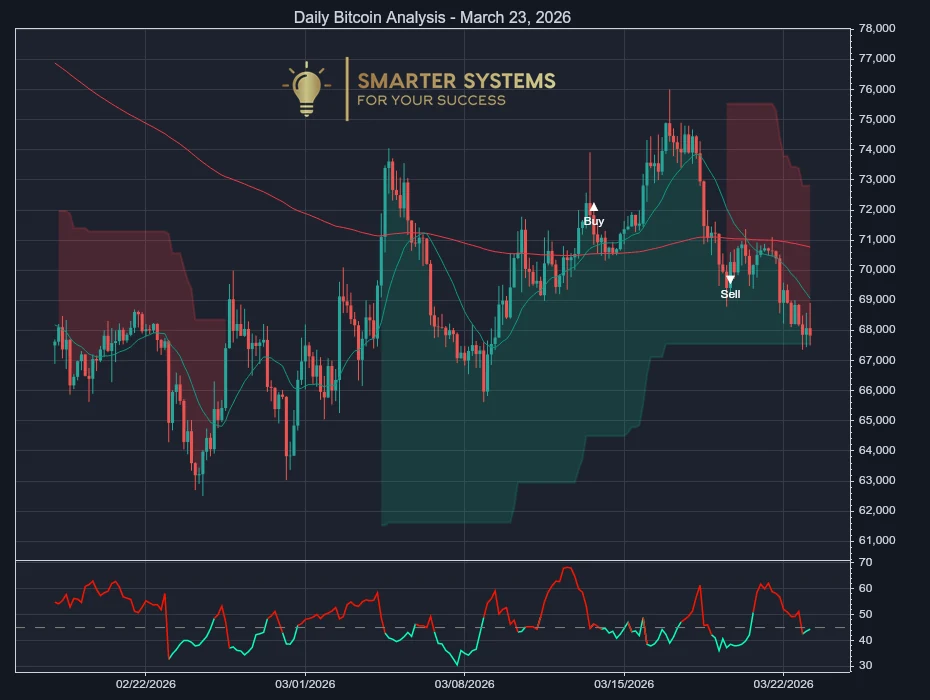
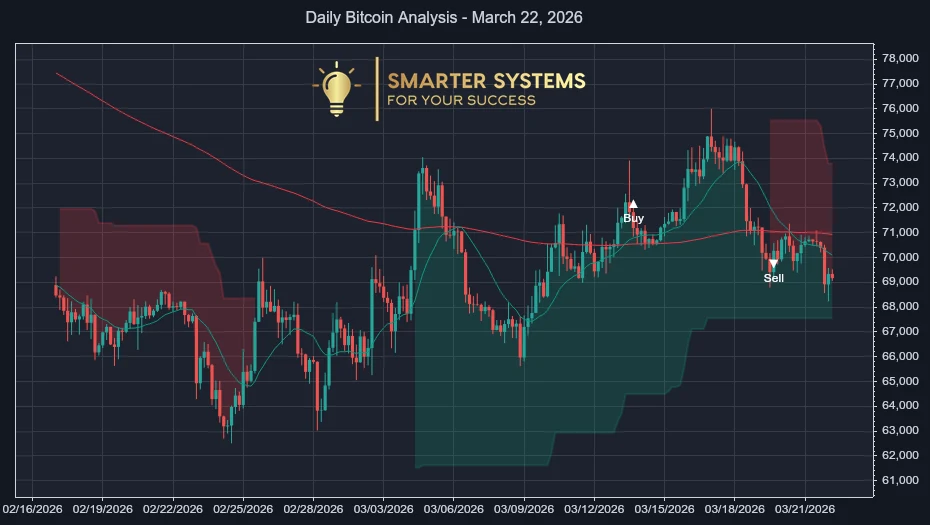
Bitcoin is sitting at 69173.88, and the striking part of the latest move is not simply that price fell earlier, but that the market has not been able to turn the rebound into anything convincing. After a sharp drop, there was room for a stronger response if buyers were truly ready to take control again. Instead, the recovery has looked hesitant, with pressure easing but not disappearing. That leaves Bitcoin in an uncomfortable spot where the panic has cooled, yet the market still does not show the kind of follow-through that would make the recent weakness feel fully absorbed.
In plain terms, Bitcoin currently looks heavy. Sellers have already shown they can push price lower with force, and buyers have so far done little more than slow that process. The market is no longer in free fall, but it is also not rebuilding with much authority. Price is moving in a way that suggests participants are cautious, selective, and unwilling to chase. That usually produces a market that can pause, flick higher for a while, and still remain vulnerable because the underlying demand is not yet assertive enough to shift the tone.
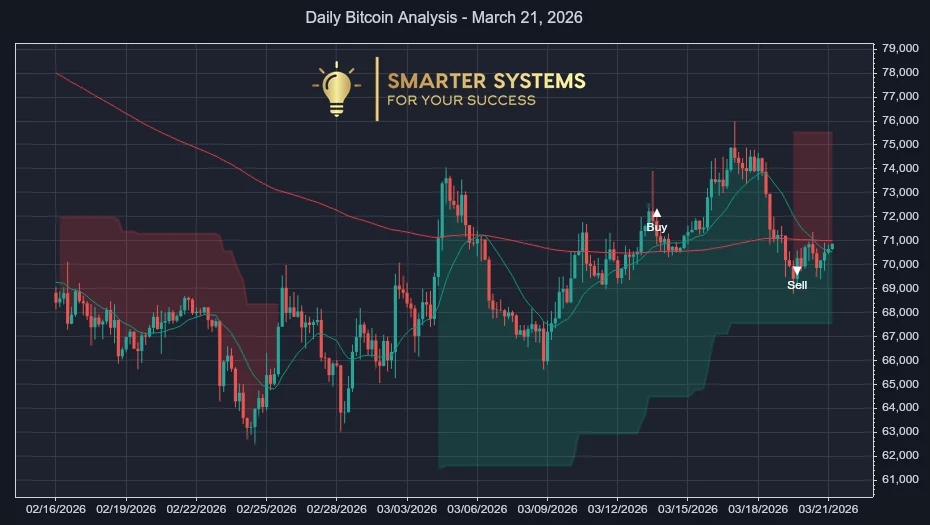
Looking only at what the data shows from one period to the next, the sequence is fairly clear. Bitcoin moved from relatively contained trading into a much more aggressive downside break, and that break came with a notable expansion in price travel and a strong pickup in participation. That matters because heavy involvement during a downside push usually tells you that selling was not incidental. It was broad enough to force movement. The following period still saw wide movement and strong participation, but the close recovered part of the prior damage, which suggests buyers did step in once price had fallen enough. Even so, the most recent period narrowed materially in terms of price travel and participation dropped off sharply. That combination often reflects a market taking a breath after a forceful move rather than one that has already rebuilt strength. In other words, Bitcoin saw urgency on the way down, some buying interest after the flush, and then a quieter stretch that has not yet proven that stronger hands are prepared to press price meaningfully higher.
The broader shape therefore still leans to the downside, but it is not a clean, orderly decline. Bitcoin is slipping lower in a way that remains unstable and uneven, with bursts of pressure followed by partial recoveries that fail to settle the question. That makes the path difficult to trust in either direction over very short stretches. The market is not moving with smooth persistence. It is moving with interruptions, hesitation, and competing reactions around lower levels. For investors, that is an important distinction. Weakness is present, but it is arriving in a messy form, which often means price can produce short-lived bounces without changing the bigger message coming from the tape.
Given that backdrop, this may be a sensible point to think more about harvesting exposure than adding fresh risk. Bitcoin has already shown that when pressure appears, it can accelerate quickly, and the rebound since the low has not yet demonstrated enough conviction to suggest that sellers have lost control. That does not mean every lower print must be chased or that price cannot bounce further from here. It means the burden of proof still sits with buyers, and until they show firmer follow-through, protecting capital and respecting the recent damage looks more prudent than leaning aggressively for upside.
Markets often behave like this after a forceful break. First comes the sharp move, then a reflex response, and then a quieter period where participants test whether value buyers are truly committed or merely opportunistic. Bitcoin appears to be in that testing phase now. The practical takeaway is simple: when a market drops hard, rebounds without much authority, and then goes quieter, the next meaningful move often comes once patience starts to wear thin. If buying interest is real, it tends to reveal itself through steadier support and better follow-through. If it is not, the market often drifts back toward pressure because the earlier sellers have not really been displaced.
// disclaimer This briefing is educational market commentary from a rule-based system. It is not financial advice and not a personal recommendation. Cryptocurrency is highly volatile, and past signals do not guarantee future results. Only invest money you can afford to lose. Read the full disclaimer.